
A roadmap you can push on
The features we build next come from what real businesses ask for — not from a whiteboard session about what might demo well.
90% of the features in our apps exist because a user asked for them. We would rather build tools people actually use than force businesses to use what we felt like making — so tell us what you need, and if we build it, everyone gets it.
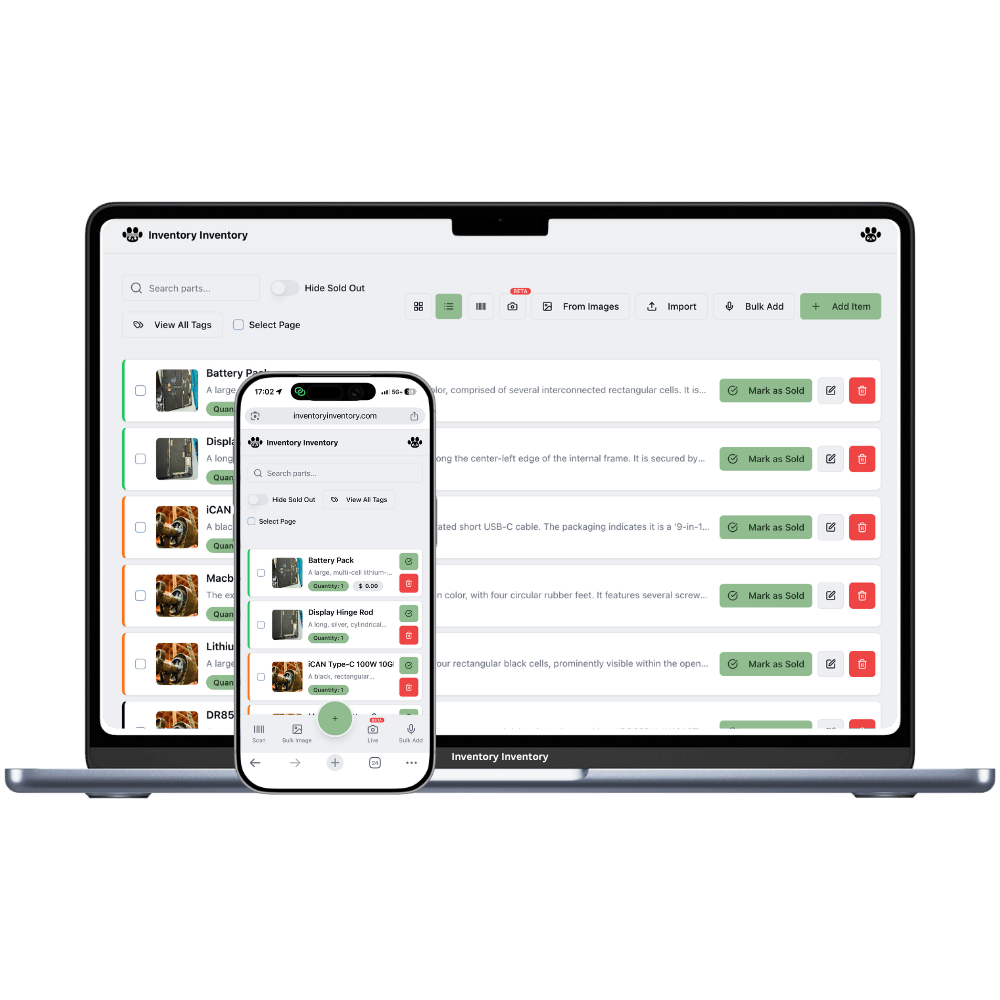
Most software companies decide what to build in a meeting room, ship it, and then convince you that you needed it. We work the other way around: businesses using Inventory Inventory every day tell us where the friction is, and that becomes the roadmap. 90% of what you see in the platform — AI alerts, purchasing and auto-reorder, supplier minimum order quantities, the iPhone and Android apps, team permissions, Square sync — exists because a user asked for it.
The mechanics are deliberately simple. Inside the app, open the menu and pick Request a Feature. Describe what you need in plain language — the problem, how you would use it, what your workaround looks like today. It lands directly with the team the moment you press submit; there is no ticket queue, no voting board where good ideas go to die.
And when a request becomes a feature, it ships to everyone. Your request might start as another business's solution and vice versa — the platform gets better for all of us at once.
The features we build next come from what real businesses ask for — not from a whiteboard session about what might demo well.
One form, plain language, straight to the team. We read every request the day it arrives.
A shipped request rolls out to every account automatically — your idea becomes part of the platform itself.
Small, well-described requests often ship within days. The MOQ support on supplier profiles went from request to released in one.
Requests carry your account email, so if we have questions we ask you directly — and you hear about it when it ships.
The goal is tools that fit how your business already works — not software that makes you reorganize your business to fit the software.
The best feature ideas come from the person doing the counting, the scanning and the reordering. If something slows you down every day, that is exactly what we want to hear about.
Requests come from real users of the platform — sign in with Google (free, no card), and Request a Feature appears in your account menu, one click from anywhere.
What problem it solves, how you would use it, what your current workaround costs you. No forms full of dropdowns — just tell us.
If it makes the platform better, we build it and ship it to all accounts automatically. You will see it appear — often within days.
Most collect them into a voting board and quietly ignore the long tail. We are small enough to do the opposite: requests go straight to the people who write the code, and 90% of the platform exists because someone asked. It is genuinely our main source of direction.
Sign in, open the account menu, and choose Request a Feature. Give it a short title and as much detail as you like — the problem, how you would use it day to day, what your workaround looks like. It reaches the team the moment you submit.
Any signed-in user of the platform. Requests are tied to real accounts — that keeps the queue honest and lets us follow up with the person who actually works with the problem every day.
Honestly: it depends on the size. Small, clearly-described improvements often ship within days; bigger systems take longer or get delivered in stages. Either way you are not shouting into a void — we read everything and follow up on the ones we build.
Send it anyway. Very specific requests are usually a sharp version of a problem many businesses have — supplier minimum order quantities started exactly that way. If it truly only fits one workflow, the developer API often covers it, and we will tell you so rather than leave you waiting.
Start free with 50 items — no credit card, no trial countdown. Import your spreadsheet and you have a working system in minutes.