
Recall in minutes
Find which orders carried a lot and which customers received it, from the orders themselves.
When an order is handed to the carrier, each line records exactly which lots left and how many from each. A recall or an expiry question is answered from the order, not from a guess about today’s stock.
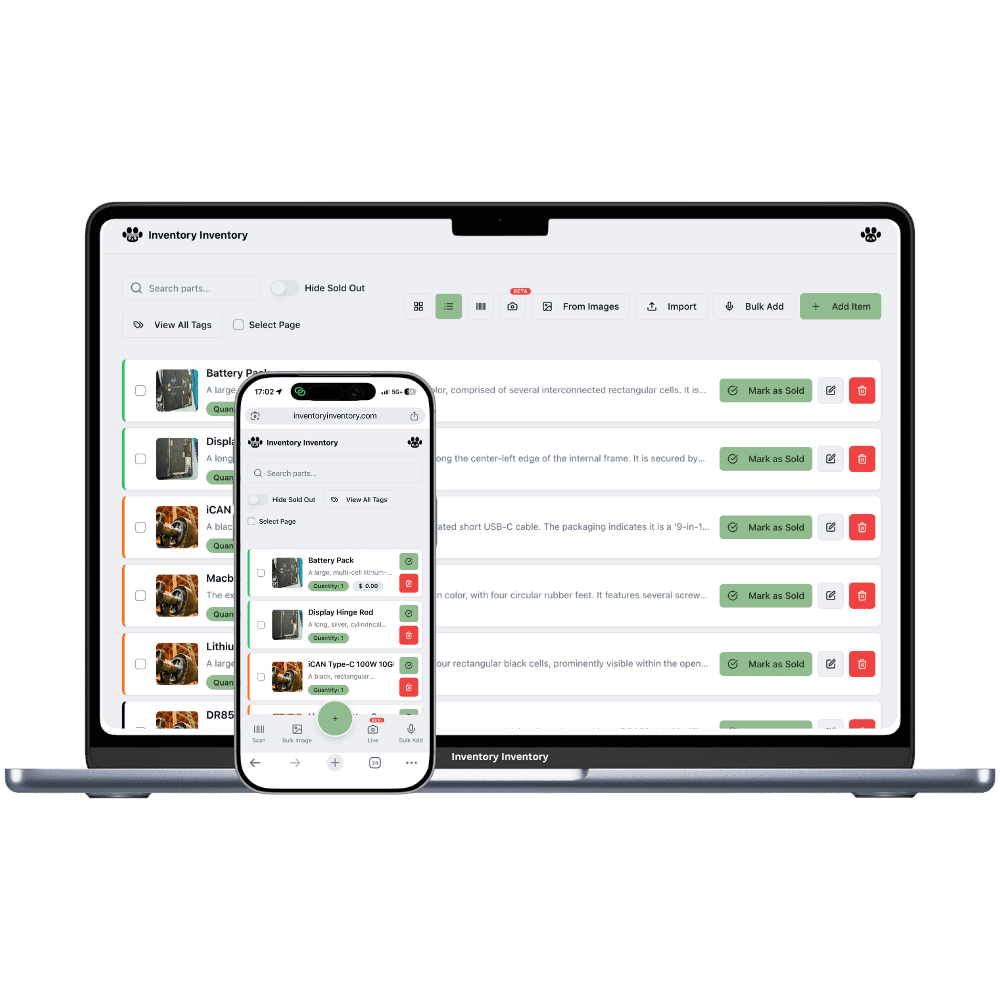
Items in Inventory Inventory can hold lots: each lot has a quantity, an optional lot number and an optional expiry date. When an order is handed to the carrier, the deduction takes units from those lots first-expired-first-out, the same rule the scanner and the sales record use. The order writes down the result on every line: which lots were taken, their expiry dates and how many units from each.
That record stays on the order. Open a shipped order and each line shows its shipped lots. The same detail is returned by the developer API and by the AI connector, so a recall check, an expiry question or an auditor’s request is a lookup rather than a reconstruction. If a supplier recalls lot 2341, you search your orders for it and you have the customers.
Each lot can also carry the unit cost it was bought at, so the same part purchased at three different prices keeps each price with its lot: value at cost and the weighted average cost follow the lots that are actually left, and a lot received from a purchase order takes the order line’s cost on its own. The selling price stays on the item. Lot traceability is part of sales orders, included on VIP, Luxury and Space. Expiry, lot and cost-per-lot tracking on items is available on every paid plan.
Find which orders carried a lot and which customers received it, from the orders themselves.
The hand-over consumes lots in expiry order, so old stock does not sit behind new.
Each line keeps its own lots and quantities, even when one line spans two lots.
The developer API and the AI connector return shipped lots on every line.
Each shipped line writes one activity log entry with the order number attached.
If your items have lots, the record is written automatically at hand-over.
"Who got lot 2341?" is a search, not an investigation. Every shipped line remembers which lots left and how many.
Add lot numbers and expiry dates when stock arrives, by hand, by scan or by import.
Hand to carrier deducts the lines first-expired-first-out and records the lots on each line.
Open the order, call the API or ask your AI connector which lots a customer received.
Open the shipped order. Every line lists the lots that left, with lot number, expiry date and quantity. The developer API and the AI connector return the same detail, so you can search across orders.
The one that expires first. Lots without an expiry date come last. This is the same first-expired-first-out rule used for sales and scanner deductions.
When it ships. Picking records who took the line and when; the lot deduction happens at hand-over, because that is when the stock leaves your count.
Yes. Each lot has an optional unit cost next to its quantity, expiry date and lot number, and a lot received from a purchase order takes the order line’s cost automatically. Value at cost and the weighted average cost are then worked out lot by lot; a lot without a cost uses the item’s cost price. The selling price stays on the item.
It comes with sales orders, which are included on VIP, Luxury and Space. Lot and expiry tracking on items is available on every paid plan.
Start free with 50 items — no credit card, no trial countdown. Import your spreadsheet and you have a working system in minutes.
New here? See how it works, layer by layer.